

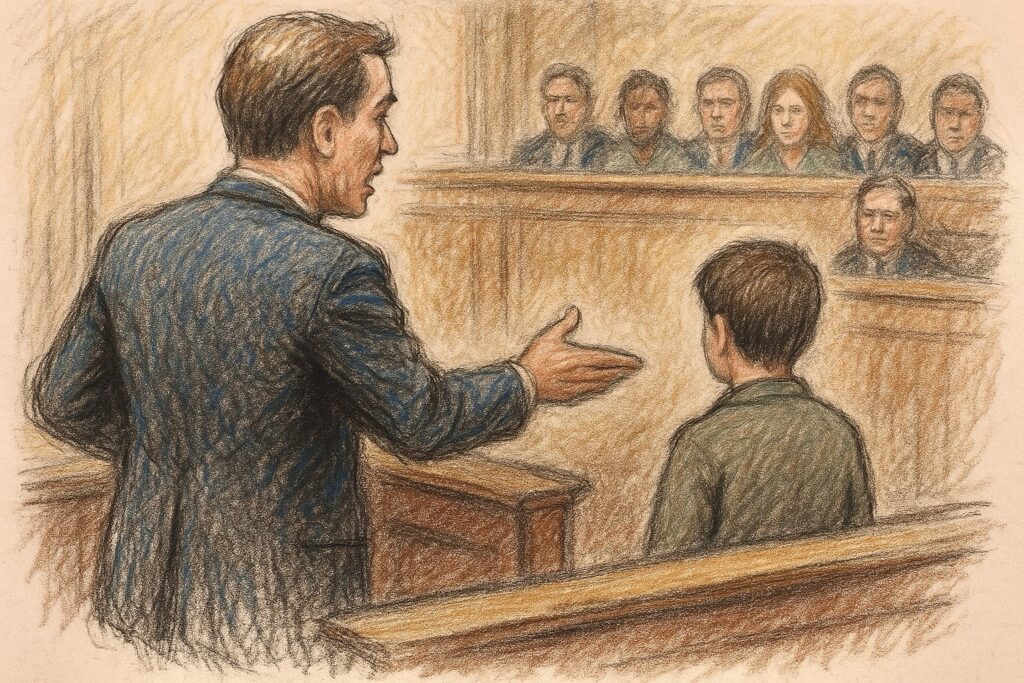
Cornell R. Tarte is diminutive. Did being called “short” in front of a jury entitle him to a new trial?
Weed dealer Michael Milton was shot in the head as he sat in his green Dodge Charger in a gas station parking lot in Camden, NJ. ShotSpotter detected the gunshot at 11:17 p.m.
Unfortunately, no one responded to the scene until someone called Milton’s brother to say something was wrong with Milton. The brother showed up at the gas station 40 minutes later, found Milton unresponsive, pushed him to the passenger seat, and drove him to the hospital. It was too late. Milton died.
Police began an investigation and recovered surveillance video from the gas station. It showed a man walk up to Milton’s car, fire through the window, then flee on foot. Shortly before that, though, the video showed Tarte’s girlfriend’s car drive through the parking lot.
Using an automated license plate recognition (ALPR) system, police found that her car had also been near two different liquor stores that evening. They obtained surveillance video from those stores and saw Tarte, wearing distinctive clothing. The clothing was consistent with that worn by Milton’s killer.
Tarte’s girlfriend also confirmed that she drove Tarte to the gas station around the same time as the shooting to buy marijuana from “the weedman.” The timing all lined up.
A few days later, the United States Marshals Service arrested Tarte on an unrelated warrant. (I’ve written before about how good the USMS is at tracking people down: https://lnkd.in/g76C5vbJ.) Police interrogated him but he denied killing Milton. Police seized his cellphone and, with a warrant, searched it and found an image of a Ruger pistol.
Months later, in an unrelated investigation in another county, police seized a Ruger pistol. Through ballistic imaging and forensic examination, they matched it to the casing found at the scene of Milton’s murder. They had the murder weapon.
There was no way to conclusively confirm that it was the same Ruger in the image on Tarte’s phone, but both the actual gun and the gun in the image shared similar rust patterns, and the consistency was relevant.
At trial, the prosecutor pointed out to jurors how short Tarte was in the courtroom, and also how short the shooter in the video was, as indicated by his size in relation to the height of the Charger. Tarte was convicted of murder.
He appealed, arguing that the prosecutor raising his height was prejudicial, since his actual height wasn’t a fact introduced into evidence. He also objected to the search of his phone.
Yesterday, the Superior Court of NJ
Appellate Division affirmed the conviction. The warrant was fine, and as to his height, the prosecutor’s comments weren’t fundamentally unfair. The killer’s identity was at issue and the jury could consider what they saw.
You can read the opinion here: https://lnkd.in/gHJV3jV5.