

I thought I had a new term to refer to an armed criminal. Boy, am I glad I looked “gunsel” up first!
One of my favorite jokes is, “I use big words, even when I don’t know what they mean, because it makes me sound more chlorophyll.”
But I never want to be the guy who says “disingenuine“ or “for all intensive purposes“ (both wrong), so I consult the dictionary a lot.
I have also learned the lesson not to “assume” more times than I care to admit. (BTW, I first heard the quip about “making an ass out of u and me” watching Benny Hill while spending the night with my Mamaw as a kid. She’s 94 now and awesome as ever. I still think of that whenever I hear “you should never assume.”)
But it seems I wasn’t the only one who assumed the meaning of gunsel.
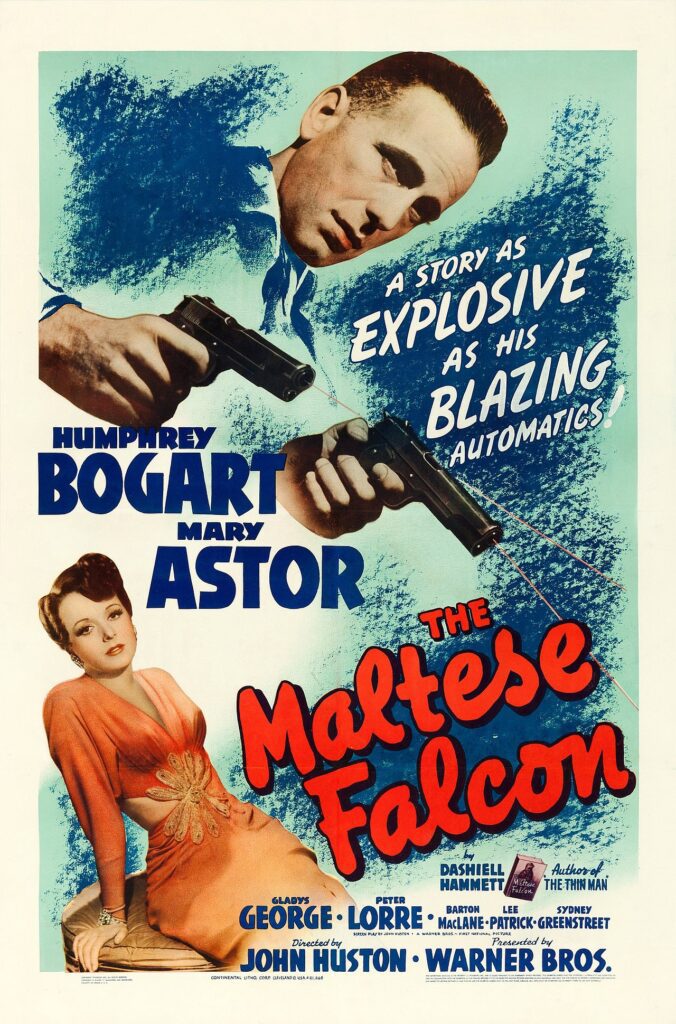
I recently read The Maltese Falcon, the classic genre-defining private detective novel of the early 20th century. After I finished it, I watched the classic movie starring Humphrey Bogart.
In both, Sam Spade refers to the young thug in the employ of the fat old man Mr. Gutman, as a “gunsel.” I assumed that meant “hired gun,” because it started with “gun” and because that’s what the young man was and it fit the context.
Just to be safe, though, I looked gunsel up. Sure enough, that is a secondary meaning of the term. (At least, now it is). But apparently that use stems entirely from the mistaken assumption about its use in the movie…including by the ratings screeners.
The primary meaning is: “a catamite” (which I also had to look up), or a young man in a sexual relationship with an older man.
Wow!
That actually also fits if Spade was using it as an insult (one that wouldn’t pass muster by today’s standards).
I’m glad I looked it up before I used it; those carry two very different connotations.
So there’s your word of the day and a reminder not to assume.
As for my review of the book and movie, they were quaint. I would call them stereotypical but I think they defined the genre, meaning all that followed were the actual stereotypes.
I did, however, enjoy the references to crime gun intelligence. They didn’t call it that, of course, but that’s what it was. When showed the revolver that killed his partner, Sam Spade identified it by make and model and noted that it was no longer manufactured. That checks out.
There were also references to ballistics matching specific guns to particular murders. These are things I still talk about in presentations today. I guess some things never go out of style.
So my quest for new terms (or rather, resurrected old terms) for gunmen continues.
In Appalachia, especially associated with the labor strife of the “mine wars” of the early 20th century, such a person would be known as a “gun thug.“ I might march that one out soon. I might also start using gunslinger, triggerman, and others.
But I’ll probably just leave gunsel alone.