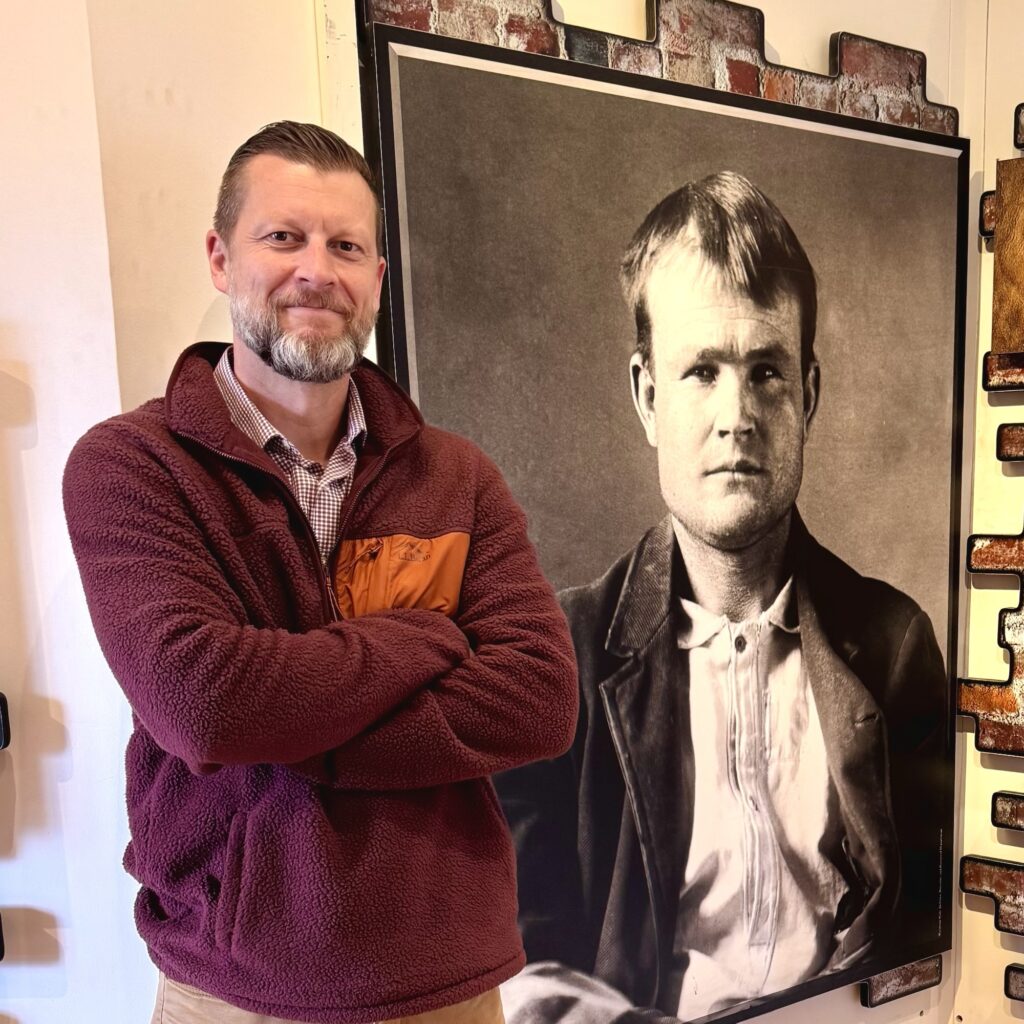
You probably thought that was Paul Newman and Robert Redford, but no. It’s just me, standing by a picture of the real Butch Cassidy.
I’ll bet you don’t often think about the historical laws of Western Territories but they still come up from time to time. For instance, in the 2022 landmark Second Amendment case, New York State Rifle & Pistol Assoc. (NYSRPA) v. Bruen, SCOTUS explained why territorial laws that restricted carrying firearms in public were not persuasive support for New York’s near-total ban on carry permits.
Sure, the Wild West offers some good examples. At the entrance to Dodge City, a sign prominently announced: “The Carrying of Fire Arms Strictly Prohibited.” (And right below that on the same sign, an advertisement for Prickly Ash Bitters.)
And you no doubt remember the shootout at the O.K. Corral. (Here’s a pic of me with Wyatt Earp and Doc Holliday: https://lnkd.in/gEMiQHFK.) In the classic movie “Tombstone,” Sam Elliott (as Virgil Earp) summed up the law that led to the shootout:
“Nobody’s saying you can’t own a gun. Nobody’s even saying you can’t carry a gun. All we’re saying is you can’t carry a gun in town.”
So why aren’t these historical laws persuasive? After all, they are similar analogues, and that’s what Bruen says the government must use to defend modern gun laws.
It’s because, as Justice Thomas wrote, “not all history is created equal.”
Even though they are seemingly on-point in that they are total bans on carrying firearms in public, these laws were promulgated by temporary governments to deal with hostile, unsettled areas with relatively small populations, and were rarely subjected to judicial scrutiny. When the territories were settled and became states, they didn’t keep these laws. So they do not represent a “historical tradition.”
(BTW, there is no bright line on when a practice is so pervasive that it becomes a “tradition.” As I wrote a few weeks ago, the law is mostly shades of gray. https://lnkd.in/g7FACdJf)
Analogues are most useful when they were long lasting, widespread, covered large populations, and tested in court.
So back to Butch Cassidy. This week I attended a firearms law conference jointly hosted in Laramie, Wyoming by the University of Wyoming’s Firearms Research Center and the Duke University School of Law’s Center for Firearms Law. It was a great conference. (More to come on that.)
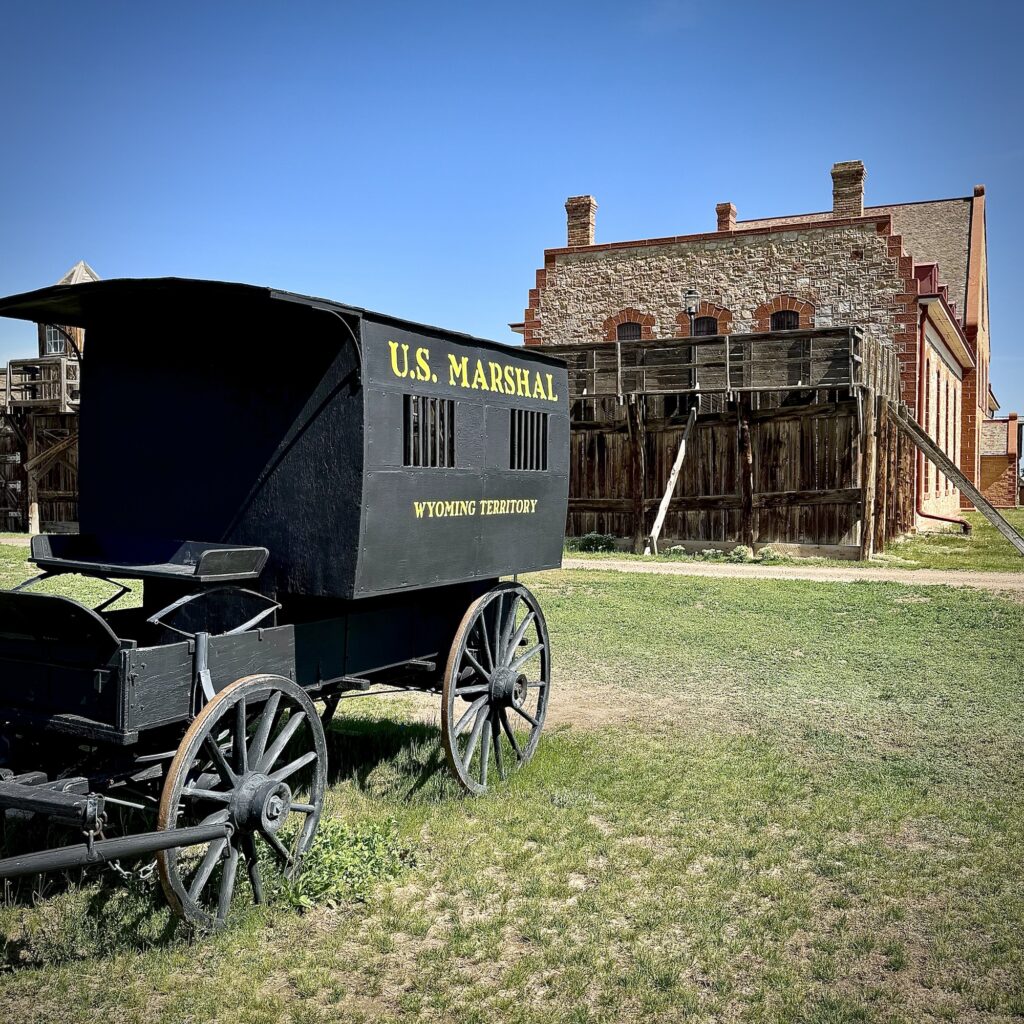
I took advantage of some free time and toured the Wyoming Territorial Prison Historic Site, which once held the real Butch Cassidy, for grand larceny. His prisoner number was #187. (And if you’re like me, now you’ll be singing that Dr. Dre and Snoop Dogg song all day.)
It was a federal prison for a while, and later a state prison, but now is just an awesome way to spend a couple hours in Laramie. (Thanks to my new friend and fellow conference attendee Antonio Pedro Machado for joining me.)
BTW, I assume you got my opening reference but JIC, it was to the 1969 movie, Butch Cassidy and the Sundance Kid.