

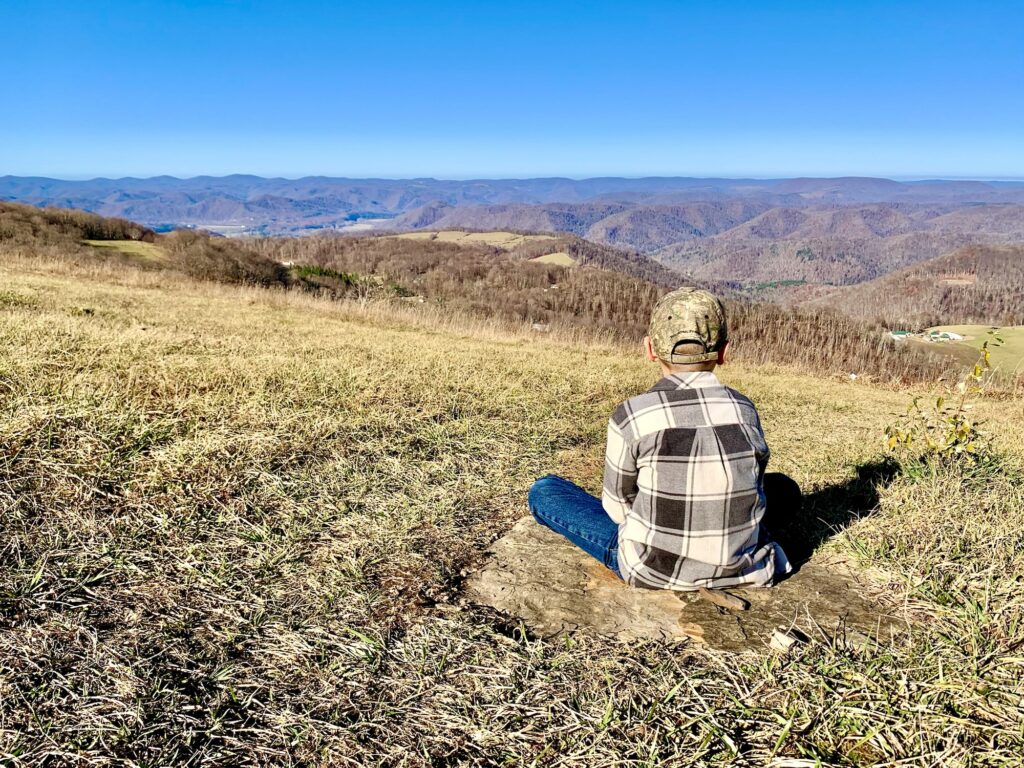
Happy West Virginia Day!
“Montani Semper Liberi.” For those not familiar, that is West Virginia’s motto. It means, “Mountaineers are Always Free.”
It’s written at the bottom of the state seal. At the center of the seal is a stone bearing the date June 20, 1863 (162 years ago today). That’s the day West Virginia became a state by separating from Virginia (without its permission, BTW, because that’s how West Virginia rolls). It’s a fascinating history.
(See the seal here: https://lnkd.in/gq5uss3e.)
Careful observers will also notice not just one but two firearms on the seal. We’ve always been partial to our guns in the Mountain State.
Occasionally though, a conviction for criminal misuse of a firearm means some mountaineers will not, in fact, always be free. Take Monica Hartwell, for example.
To mark WV Day, I reviewed recent gun-related cases from the Supreme Court of Appeals of West Virginia and found hers. For the next 40 years, she will not be free. She’ll be in prison.
At issue was whether her response to the state trooper who asked her, “Where’s the gun?” was admissible.
Here are the facts: Hartwell lived with her boyfriend, who apparently suffered mental health issues. One day, he was loudly ranting on their front porch and she must’ve had enough, because she shot him.
Witnesses heard the gunshot and called police but didn’t see her shoot him. When police arrived, they called her out of the house and cuffed her. Without Mirandizing her, a trooper asked her where the gun was. “It’s on the couch,” she answered.
No witness saw her shoot him. He was dead and couldn’t tell police she shot him. She didn’t confess to shooting him. And no forensic evidence connected her to the shooting. Therefore, her knowledge of the whereabouts of the murder weapon was crucial to making that inference.
But she was in custody and hadn’t waived her Miranda rights when she was asked a direct question by a known law enforcement officer. Is her response admissible?
Last month, WV’s highest court said yes.
In the 1984 case, “NY v. Quarles,” SCOTUS announced a public safety exception to Miranda, reasoning that some questions were so pressing to public or officer safety that they trumped Miranda’s “prophylactic rule.” That exception applied here.
This was the first time WV’s Supreme Court expressly adopted Quarles’ public safety exception. Courts have developed two approaches to Quarles, and this court elected to follow the “narrow” approach, a fact-specific analysis to determine the immediacy and exigency of the situation. Here, there was an unsecured gun in an unknown location, and that was enough.
Read the opinion here: https://lnkd.in/g47SyMvc.
(BTW, I took that picture of my son on a roadtrip he and I took through WV. Even though he wasn’t born there, I have instilled in him the same zeal for liberty that defines my home state. He was born in Nevada, the only other state—besides WV—created during the Civil War, hence its nickname “Battle Born State.”)