

Let’s say you and your pals rob a stash house but you’re nabbed before you get a cut of the loot. How much do you owe Uncle Sam?
Matthew Elias did just that. He was a getaway driver for a group that stole $20K, a gun, and 40 lbs. of weed in NYC (after beating up and restraining the person guarding the stash house). But he and several of his co-conspirators were arrested in a traffic stop shortly after the heist. (A few of the crooks were in a separate car and eluded capture for a while.)
Elias was convicted of a “Hobbs Act” robbery (18 U.S.C. § 1951(a)), and of using a firearm in furtherance a crime of violence (18 U.S.C. § 924(c)). The Hobbs Act makes it a federal crime to conspire to or to commit a robbery that affects interstate commerce.
(I’ve written about the Hobbs Act before, such as in this post that explains why Yoda would be a terrible attorney (https://lnkd.in/gfKkYaBb) and this one about a Monty Python sketch (https://lnkd.in/gUrjJ98z).)
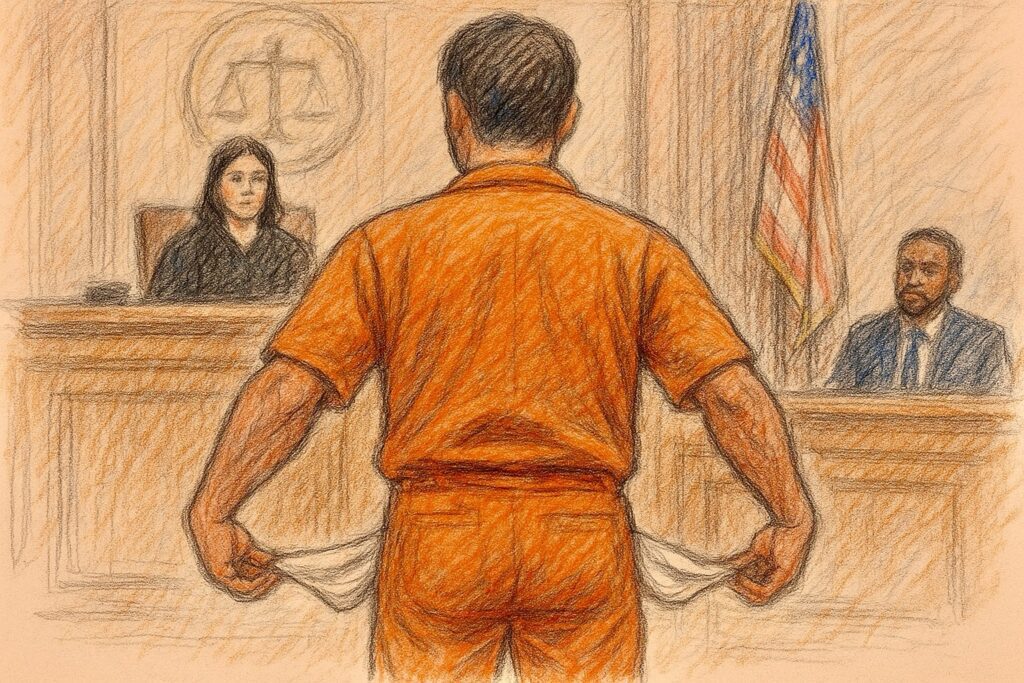
At sentencing, Elias was also ordered to forfeit $10K, which would’ve been his cut of the total proceeds of the robbery. But Elias never received a dime. No bother; the government sought “substitute assets,” which would allow it to seize other property up to the value of the judgment.
Elias appealed. He argued that SCOTUS precedent about a different forfeiture statute applied to his case and only requires divestment of criminal proceeds actually received, not just theoretically possible.
This week, the Second Circuit agreed with Elias, holding that he could only be required to forfeit assets he actually received. This deepens a circuit split. The 2nd now agrees with the 3rd, 9th, and 11th, and disagrees with the 6th and 8th.
Elias still has to serve 10 years in prison though, so he found out the hard way that crime doesn’t pay.
But at least he doesn’t have to.
You can read the opinion, which offers a nice primer on federal forfeiture law, here: https://ww3.ca2.uscourts.gov/decisions/isysquery/16c669ad-7c6f-4e6f-9953-0ac634d11708/2/doc/23-6626_opn.pdf.