

I often write about firearms, sometimes explosives, but rarely alcohol or tobacco. They make up half of ATF’s official name (and 2/3 of its acronym) but only a tiny fraction of its modern mission.
Alcohol and tobacco, however, offer a fascinating study in American history and the mechanics of “gray” markets. (Not really “black” markets, because these are legal, if highly regulated, products.) They also implicate important business interests, like counterfeiting, trademark protection, and regulatory compliance.
Ultimately, though, alcohol and tobacco enforcement are mostly about taxes (and indirectly, public health).
In my time at ATF, I busted up a moonshine still in Kentucky (something any self-respecting ATF agent in rural Appalachia must experience at least once); worked a long-term undercover assignment on a contraband cigarette trafficking investigation in Chicago; used counterfeit tax stamps and untaxed cigarettes to target an organized retail crime network in Las Vegas; and developed operational and oversight policies for ATF’s A&T enforcement and regulatory missions in Washington, D.C. Arcane subjects perhaps, but I always found them fascinating.
Especially with cigarettes, the taxes evaded can represent substantial lost revenue to states and potential criminal proceeds for traffickers. It also reveals some interesting things about economics and human behavior.
(The basic mechanics of cigarette trafficking are: traffickers buy the product in bulk in low-tax states and transport them to high-tax states, where they can sell them well below the retail price of a legit pack of smokes and still clear several dollars profit on each pack. It’s an incredibly lucrative crime with a low risk of detection and minor penalties if caught and convicted.)
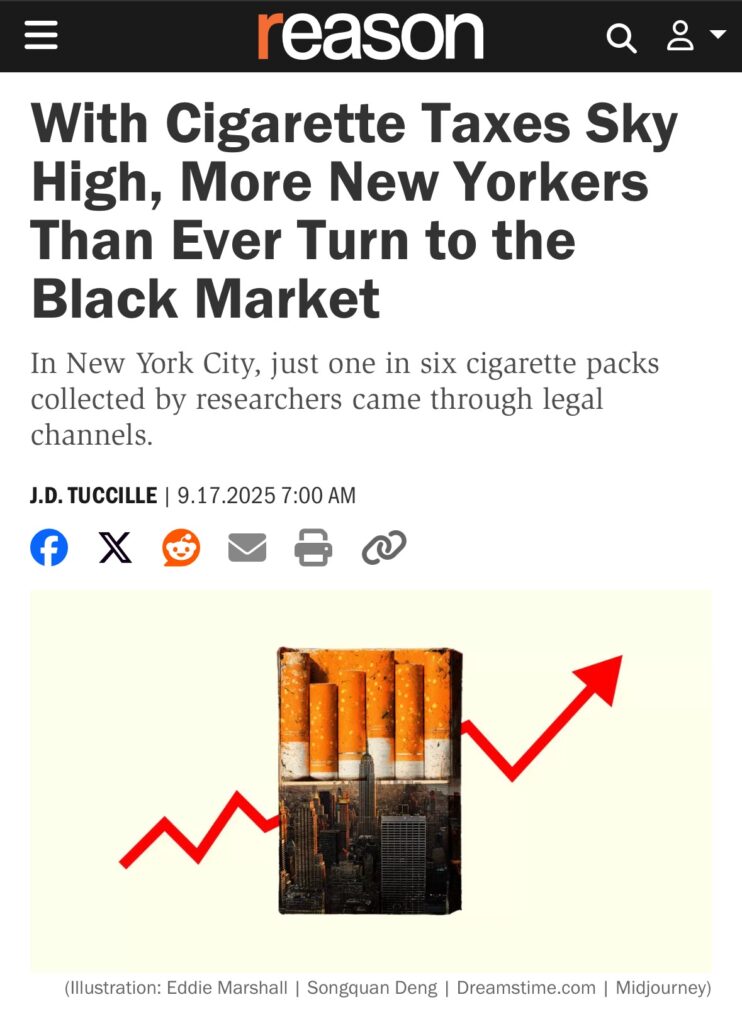
J.D. Tuccille has followed this issue for a while and recently wrote another story for the Reason Foundation on the scope of cigarette tax evasion, especially in high-tax states like New York. I found it interesting and thought you might, too.
Two last factoids for you. While the Contraband Cigarette Trafficking Act (CCTA) has been around for a while, it was strengthened by the Patriot Act after 9/11, in part because trafficking schemes have been linked to funding for foreign terrorist organizations.
And federal law defines “contraband cigarettes” as more than 10,000 (so at least 10,001, which sounds like a lot but really isn’t) cigarettes that don’t bear the tax stamp of the state where they’re found.
So next time you light up (which you probably only do when you’re drinking alcohol!) take a look at that stamp on the bottom of the pack.
And remind me sometime to tell you about the hidden features that can reveal whether your cigarettes are genuine or counterfeit.
You can read the Reason story here: https://reason.com/2025/09/17/with-cigarette-taxes-sky-high-more-new-yorkers-than-ever-turn-to-the-black-market/.