

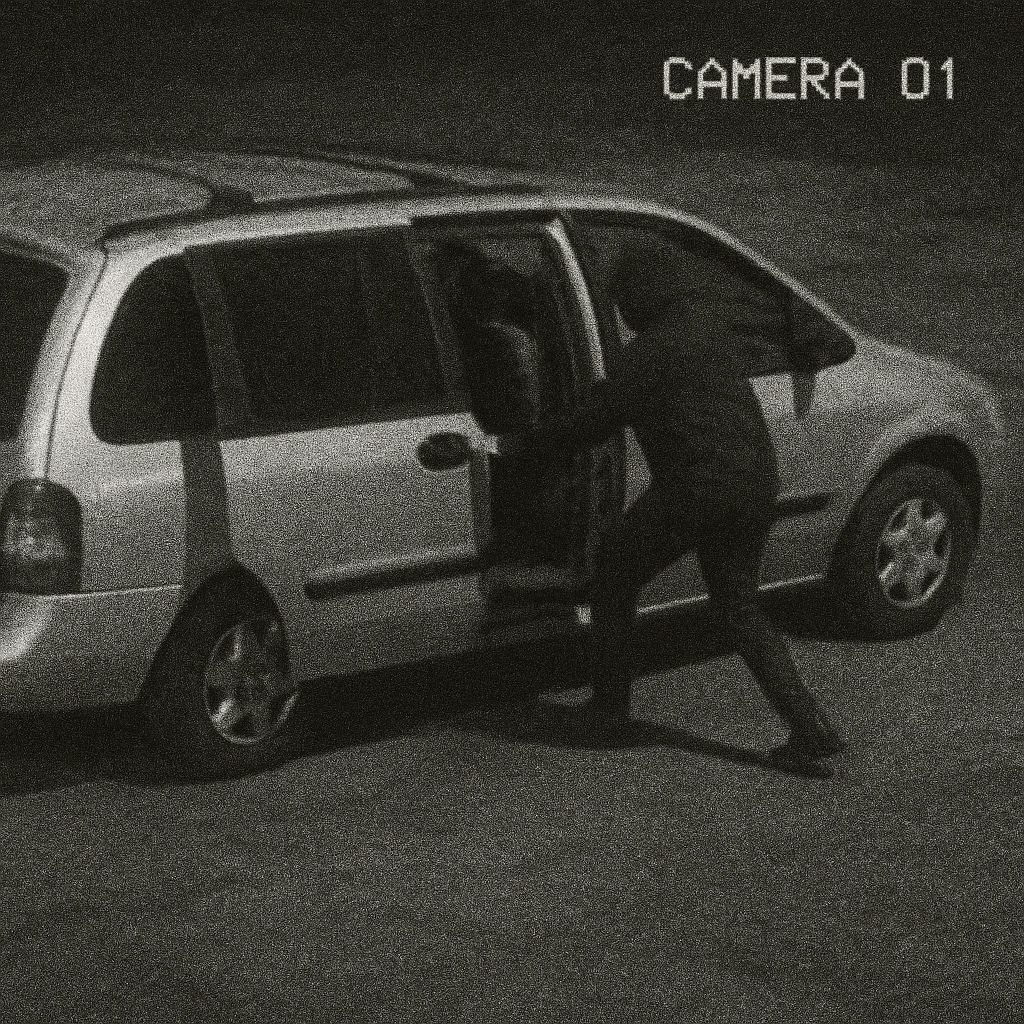
Some attorneys are better than others. This tiny killer thought his defense attorney was one of the bad ones.
Edwin Davis arose early one morning in Camden County, NJ, to go to work. His fiancé heard him leave the house just after 6:00 a.m. She did not hear the single gunshot that killed him right after that, though. But ShotSpotter did, at 6:07 a.m.
Police investigating Davis’ murder would subsequently learn that Allen Reed called his girlfriend at 6:10 a.m. to come pick him up from the area. It was raining.
A surveillance camera captured video of Reed, dressed in all black, entering his girlfriend’s minivan. A license plate reader (LPR) also recorded her van driving in the area.
Police acted quickly and were searching the girlfriend’s house before Reed’s clothes had even dried. They found his wet sweatshirt. It was large. But Allen is small. He only stands 5’5” and weighs 145 pounds (“soaking wet!”).
They also found a revolver. One round in the gun had been fired. A firearm examiner forensically linked that gun to the round that killed Edwin.
And the girlfriend testified that when Allen entered the minivan, he told her that he shot Edwin because when Reed told him to get on the ground, Edwin did not comply but instead tried to defend himself.
Not surprisingly, Reed was convicted at trial for murdering Edwin, and a host of gun-related violations. He subsequently argued that he was denied his constitutional rights because his attorney failed to pursue a third party guilt defense (i.e., “someone else did it”).
Specifically, he thought the attorney should argue that it was the other man who lived in the girlfriend’s house.…and was 6’2” tall. He believed the surveillance video suggested the person entering the minivan was taller than Reed (it didn’t really, though). And the sweatshirt would be baggy on Reed (which is also flimsy).
The Sixth Amendment guarantees criminal defendants the right to be represented by an attorney. In Strickland v. Washington, SCOTUS announced a two-part test for establishing a claim that defense counsel was so ineffective as to amount to a denial of that right.
First, a defendant must show the attorney’s performance was deficient. That, in itself, is a high bar. Courts presume that attorneys exercise reasonable professional judgment. A defendant claiming ineffective assistance of counsel must overcome that presumption.
Second, even if the attorney’s performance was deficient, the defendant must prove that he was prejudiced by it, and “but for” that poor performance, the outcome would have been different.
Here, Allen could do neither. Although an attorney must thoroughly investigate the relevant law and facts, whether his attorney investigated the third party guilt claim is irrelevant. That’s because the weak evidence Allen pointed to came nowhere near overcoming the strong evidence that he was guilty.
So, not investigating that weak claim (whether the attorney did or didn’t), wouldn’t have been deficient. And even if the attorney had, and had presented it at trial, it wouldn’t have changed the outcome.
The lower court was right to reject his claim (and didn’t need to hold a hearing to do it) and yesterday the Appellate Division of the New Jersey Superior Court affirmed that decision.
You can read the opinion here.
(BTW, that image is not the actual image in dispute. It is AI-generated from a simple prompt. AI is amazing! It may replace us all one day. At least then there will be no more bad lawyers.)