

When was the last time you dusted under your bed? Prolly been a minute. Unfortunately (for him), same for this guy.
Early one morning in May 2021, police responded to a ShotSpotter alert of gunfire near a residence in Ft. Myers, Florida. When they arrived, they spoke to a man who told police he was alone in the house with his kids and had heard no gunfire.
I imagine the conversation went something like this: “Gunfire, you say? Nope, no gunfire here. That’s crazy. Gunfire, huh? No-sir-ee. Just me and my kids having a peaceful, quiet night at home alone.”
Just then, six other dudes (including Javonte Whitfield) emerged from the house, one of whom had been shot and was bleeding everywhere. “Oh, THAT gunfire.”
Police searched the residence and found numerous firearms and other items (including blood the victim had shed inside the house).
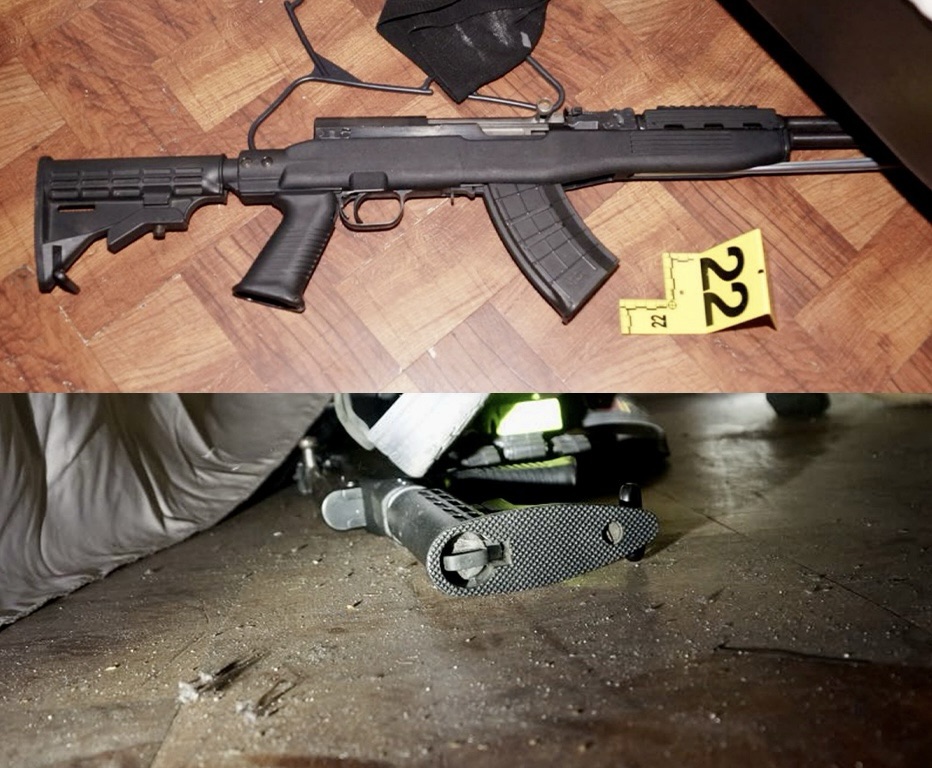
Under a bed they found a rifle (the first picture). They also found a lot of dust (the second picture). That dust mattered.
I’ve written before about how important context is to the legal significance of facts. (See this post: https://lnkd.in/gdB9k47h.)
Here, the firearm was dust-free, but the place it was found (under the bed) was very dusty. From that jurors could infer the firearm had not been there long. That was important because a forensic tech recovered Whitfield’s thumbprint from the rifle.
And Whitfield had been a convicted felon for about three years. “Maybe that fingerprint was made before I became a felon,” he argued in his defense.
Nope: the dust.
The jury convicted Whitfield and he appealed. Last month the U.S. Court of Appeals for the 11th Circuit affirmed his conviction. The dust was actually a small part of the decision but the photos were included in the opinion, and it is interesting support for the sufficiency of the evidence.
Whitfield also argued his prior conviction should not have been discussed at trial because he stipulated to it. Unlike SCOTUS in the case of Johnny Lynn Old Chief (which we cover in my 2A class at UNLV but was not cited in the opinion), the court said it was appropriate 404(b) evidence. There’s some gray here, but this case is distinguishable from Old Chief in a few ways.
Whitfield also objected to testimony about the blood found in his house. Indeed, that blood had a little bearing on his felon-in-possession charge and probably could have been kept out, but because his attorney did not object to it at trial, he had not preserved that issue for appeal.
He also raised an argument about the prosecutor’s closing argument (in which he raised some issues that hadn’t been introduced into evidence), but the court found no problems.
So Whitfield stays in prison. Where he will have lots of time to think about the important lesson he learned about good housekeeping.
You can read the opinion here: https://lnkd.in/gQDpVPDx.